What Makes the Uganda Premier League Competitive

Ugandan football struggles to compete with English Premier League | Soccer | The Guardian

A league with many types of pressure

The Uganda Premier League is competitive because its clubs face several kinds of pressure at once. They need points, but they also need to manage travel, squad rotation, injuries, local expectations and the challenge of building a stable style of play. A team can be excellent at home and still struggle away, while another may be difficult to break down even when it does not dominate possession.

For someone using uganda betting sites alongside league coverage, this is an important reminder that a table alone does not tell the whole story. Recent form needs context. Was a win built on strong play or a late set piece? Did a defeat come after a red card, a difficult journey or a run of injuries? The closer the reading of the match, the less tempting it is to make overconfident assumptions.

A competitive league is not simply one in which the top places change. It is one in which a well-prepared side can challenge a stronger name because tactics, energy, travel and concentration all matter over ninety minutes. The people involved are club coaches, players, analysts, referees, travelling teams, youth prospects and supporters who follow the table week by week. In that setting, details such as home and away patterns, travel, defensive shape, transition moments, set pieces, player availability and how teams manage pressure late in matches are not background noise; they shape the experience and reveal what needs attention. Looking at this layer adds useful context. It explains why two events with the same final score or placing can feel completely different, and why a well-run but quiet occasion can matter just as much as a dramatic one. Sport becomes more informative when those details are noticed. This early work is easy to miss, yet it often determines whether the event feels calm, accessible and worth repeating for a first-time visitor as well as for a committed participant.

Tactical variety creates uncertainty

Some Ugandan teams want to press high and use quick transitions, while others prefer a compact block and direct play. The contrast makes fixtures interesting because a team that looks comfortable against one style may find another difficult. Set pieces are particularly important in close league matches, where one well-delivered corner or free kick can decide the result.

Coaches also have to balance immediate needs against development. Giving a young player minutes may involve risk, but it can add energy and create future value. More experienced players bring game management, especially in fixtures where the crowd is demanding and the match is becoming emotional.

Uganda Premier League matches can produce very different problems for visiting teams. A compact block, an energetic press, a direct counterattack or a set-piece threat may require an opponent to change its normal rhythm. Behind that visible activity sits a system: reliable fixtures, fair officiating, usable training facilities, transparent club planning and youth development that gives squads genuine depth. These elements may seem administrative, but they decide whether preparation is calm or rushed and whether a sporting space feels open to the people it is meant to serve. It is worth treating these practical arrangements as part of sporting standards. They make participation safer, lower the chance of avoidable disruption and allow the best qualities of the competition to become visible. The practical test is whether people can understand what is expected of them, prepare in good time and focus on the sporting task rather than on avoidable uncertainty.

Why competition is good for the game

A league becomes stronger when teams believe they can affect the table, beat a traditional rival or challenge for a cup. That belief pushes clubs to invest in coaching, preparation and player welfare. It also gives supporters a reason to follow fixtures outside their own club, because each result can influence a wider race.

The most rewarding way to follow the league is to enjoy that uncertainty rather than try to eliminate it. Football is built on moments that cannot be planned: a goalkeeper’s save, a defensive error, a change in weather or a substitute’s first touch. Keeping expectations realistic and money separate from emotion helps preserve what makes the competition worth watching.

League position is useful but incomplete. A recent run can be shaped by injuries, a difficult travel sequence, red cards or a series of narrow matches that are decided by one defensive mistake rather than an overall lack of quality. A closer observer can use home and away patterns, travel, defensive shape, transition moments, set pieces, player availability and how teams manage pressure late in matches as a guide, then compare what was planned with what unfolded. The same final result can have several causes, so it helps to watch where pressure appeared, who adapted and which small decision changed the balance. The aim is not to turn every viewer into a specialist. It is simply to replace vague reaction with a more curious, grounded understanding of what actually happened. Keeping a short record of these details from one event to the next is often enough to reveal a pattern that a single score, clip or headline would hide.

Competition should reward good work

A competitive league gives clubs a reason to improve the details that are easy to ignore when results come easily. Fitness, recruitment, scouting, coaching education and medical support become more important when every opponent can create problems. Those investments benefit the players first, but they also make the league more credible and more enjoyable to follow.

The league’s unpredictability is therefore a strength, not a flaw. It gives smaller clubs a chance to create a moment, tests the depth of established teams and makes every point meaningful. Treating that uncertainty with respect is a sign of real football understanding.

Competition also improves players. Regular exposure to close matches teaches leaders when to slow the game, teaches defenders how to protect a lead and gives young attackers a clearer sense of how little time they have in the box. This is where players gaining regular senior minutes and learning how to compete in different stadiums, tactical systems and match states becomes important. Development works best when expectations are clear and the next opportunity is earned through learning, not through pressure to look finished too early. This long view benefits the whole community. It creates better players and athletes, but it also develops future coaches, officials, organisers and informed supporters who understand the work required behind performance. That is particularly important for young participants, who need feedback that explains what to practise next instead of a verdict that labels them too early.

Why the league matters

The Uganda Premier League is a place where talent, organisation and local ambition meet every week. Its strength comes from the fact that results are never automatic. That competitive edge gives clubs a reason to improve and gives the public a competition whose stories keep changing from round to round.

For the league to remain credible, operational standards matter alongside tactics. Accurate fixture information, safe venues and qualified officials make it easier for clubs to plan and for supporters to judge performances fairly. The lasting standard is straightforward: a competitive league should reward preparation and improvement while leaving room for different styles of football. That principle helps supporters, organisers and athletes decide which parts of the experience deserve investment and which habits should be changed. The point is not to make sport less emotional. It is to give that emotion a constructive place, so the energy around an event supports people rather than exhausting them. It gives everyone involved a useful decision rule: choose the action that protects participation, learning and respect after the noise of a single result has faded.

A longer view of the subject

For that reason, the subject deserves more than occasional attention. It offers a way to see how individual effort, local organisation and public support meet in the same sporting space. When those elements are allowed to reinforce one another, the result is not just a better event but a stronger route for the people who will play, coach, organise and follow it next. For the competitive balance of the Uganda Premier League, that is the practical meaning of sustained support.

One final point is that the competitive balance of the Uganda Premier League depends on continuity. When club coaches, players, analysts, referees, travelling teams, youth prospects and supporters who follow the table week by week can rely on reliable fixtures, fair officiating, usable training facilities, transparent club planning and youth development that gives squads genuine depth, the next season or event begins from a stronger place. That continuity makes it easier to protect players gaining regular senior minutes and learning how to compete in different stadiums, tactical systems and match states and to keep the standard clear: a competitive league should reward preparation and improvement while leaving room for different styles of football

That is also why small improvements should be recorded. Better information, calmer preparation and stronger links between local participants all make the competitive balance of the Uganda Premier League more useful to the people who will encounter it next.

Passione su due ruote: quando la meccanica incontra la memoria
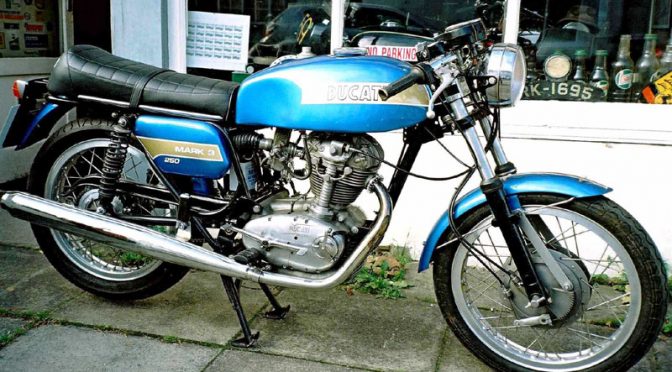
Restaurare una motocicletta d’epoca significa molto più che rimettere in moto un vecchio motore: è un viaggio nella storia, nella tecnica e nell’estetica italiana. Ogni linea della carrozzeria, ogni rumore del motore racconta un’epoca. In questo universo, Italian Motorbykes è nata per accompagnare gli appassionati nel percorso di recupero, restauro e condivisione della propria passione su due ruote. Continue reading Passione su due ruote: quando la meccanica incontra la memoria